
A land where Pachamama is at the heart of life, ecotourism in Peru isn’t just a style to travel but a way of honouring a value that runs deep.
The Earth was at the heart of daily life and worship for the Incas, and the sentiment continues to run strong among the people of Peru today.
If you want to truly get a taste of Peruvian culture – and Andean culture in particular – there is no way to do so without opening your heart and mind to Pachamama.
That’s why, even though I encourage you to travel responsibly during every adventure, ecotourism in Peru holds an extra layer of significance.
In a culture that values nature so highly, the only way to travel is by showing up with equal respect for the planet we live on. After all, you’re here to enjoy one of the most culturally and naturally rich parts of it.
Here is everything you need to know about responsible travel and ecotourism in Peru, so you can take away – and give back – as much as possible from your trip.
Just to let you know… This post contains affiliate links, including Amazon Associates links. I may receive a small commission from them at no extra cost to you.
Ecotourism in Peru: what you need to know
Fortunately – and as you can probably imagine – there are lots of opportunities to enjoy ecotourism in Peru.
The Amazon covers 60% of the country, while the Andes mountain range – which also runs through six other continental countries, including Ecuador, Colombia and Argentina – separates Peru’s long coastline from its lush jungle territory.
For nature lovers, Peru’s geography offers limitless opportunities to explore and connect with the natural world and Pachamama.
Pachamama is just one word you’re likely to hear multiple times while travelling in Peru.
While the majority of Peruvians identify as Catholic, many of them still practise indigenous religions and worldviews – most of which revolve heavily around nature and the natural world.
This is especially true in the Andes and something you’re sure to notice if you choose to hike the Inca Trail or any of the other trails near Machu Picchu.
Ayni is another word you’re sure to hear when visiting Peru. Meaning ‘reciprocity’ in Quechua, this indigenous worldview reminds us that we must live in harmony with nature. As we take, we must give back.
It’s a good philosophy to keep in mind while travelling Peru.
In a country that boasts both some of the most fascinating archeological sites and some of the most breath-taking landscapes, tourism in Peru shows no sign of slowing down.
And, while much of the tourism in Peru centres around the natural environment, the unnatural act of tourism can contribute to pollution, deteriorating sites and other issues.
As travellers, then, it is especially important to be aware of the impact our adventures can have on both the lands we explore and the people who call them home.
Here are some ways to enjoy responsible travel and ecotourism in Peru in a way that supports the environment, society, the economy and local communities.

10 Ways to enjoy responsible travel & ecotourism in Peru
1 – Choose your tour company carefully
Perhaps the best thing you can do in Peru to travel as consciously is to choose the right tour company.
While there is an increasing number of regulations to protect workers in the tourism industry – many of whom carry out arduous, physically challenging jobs – these rules aren’t always adhered to.
It’s easy to take advantage of workers, especially in tourist hotspots like Cusco, and, it sadly seems that some companies do.
The easiest way to help combat this is to choose a company that treats its workers fairly.
I took both a Sacred Valley tour and hiked the Classic Inca Trail with Alpaca Expeditions, and they really go beyond what’s required to ensure the best experience for their workers.
In addition to paying a fair wage and making sure all porters, guides and cooks are equipped with quality equipment, they run a number of initiatives in the local communities.
These include everything from planting native Queuña trees, which are more sustainable than others used in the communities and will eventually be fertiliser to help grow more grass for alpacas, to taking workers’ families to visit the Incan sites – something they may otherwise never get to experience.
While these are all the kinds of things you might not witness yourself, you can contribute to these important initiatives by choosing a company like Alpaca.
2 – Stay in sustainable properties
You don’t need to book an ecolodge or specialised resort in order to make your stay in Peru a sustainable one.
When you book your accommodation using Booking.com – my go-to travel booking platform! – you can now see which properties actively focus on sustainable practice.
The platform’s ‘Travel Sustainable Property’ badge is awarded to properties that demonstrate sustainable practices and can be seen directly from the search results.
You can also filter results so that you only see properties that have been verified on this programme, making it easy to choose consciously when booking your accommodation in Peru.
Rumi Punku, the hotel I stayed in for the majority of my trip to Cusco, is one example of the properties available. They had free filtered drinking water available – which really helped to cut back on my plastic usage! – and actively advise on how to reduce water usage in the rooms.

3 – Enjoy locally sourced food
Peru is an absolute paradise for foodies, so you won’t have to worry about eating well. Peruvian food is one of the most delicious and unique cuisines in the world, with many options for all tastebuds and dietary requirements.
A lot of crops are also grown there, including coffee, cacao, avocados, grapes, quinoa and much more.
Finding a restaurant with tasty food is easy in Peru. So, the only thing you should keep in mind is knowing where exactly your food comes from.
With an abundance of locally sourced, organic and vegan restaurants – and some that combine all three! – it’s easy to enjoy a quality meal in good conscience throughout Peru.
And, if you want to really learn about the foods grown in Peru, I recommend taking a cooking class. As well as being a great way to sample more of the unique foods available, you’ll be able to relive your travels at home with the recipes you’ll learn!
4 – Support local initiatives
Just like almost anywhere, Peru has its fair share of social initiatives – but they’re not always easy to find.
This is something that I learned while staying in Cusco. In my experience, the best way to discover cool projects and events is by asking a local.
By doing so I found out about a local charity that trains alpacas to help in therapies for ADHD, Autism and more (and where you can visit them and offer a donation).
I also learned that certain local businesses, such as the Niños hotels and restaurant, have their own foundations and ways of giving back. In the case of Niños, the Niños Unidos Peruanos Foundation helps to provide meals and essential care to underprivileged children in the surrounding area.
By supporting businesses such as these, you can be sure your tourism money is helping those who need it most.
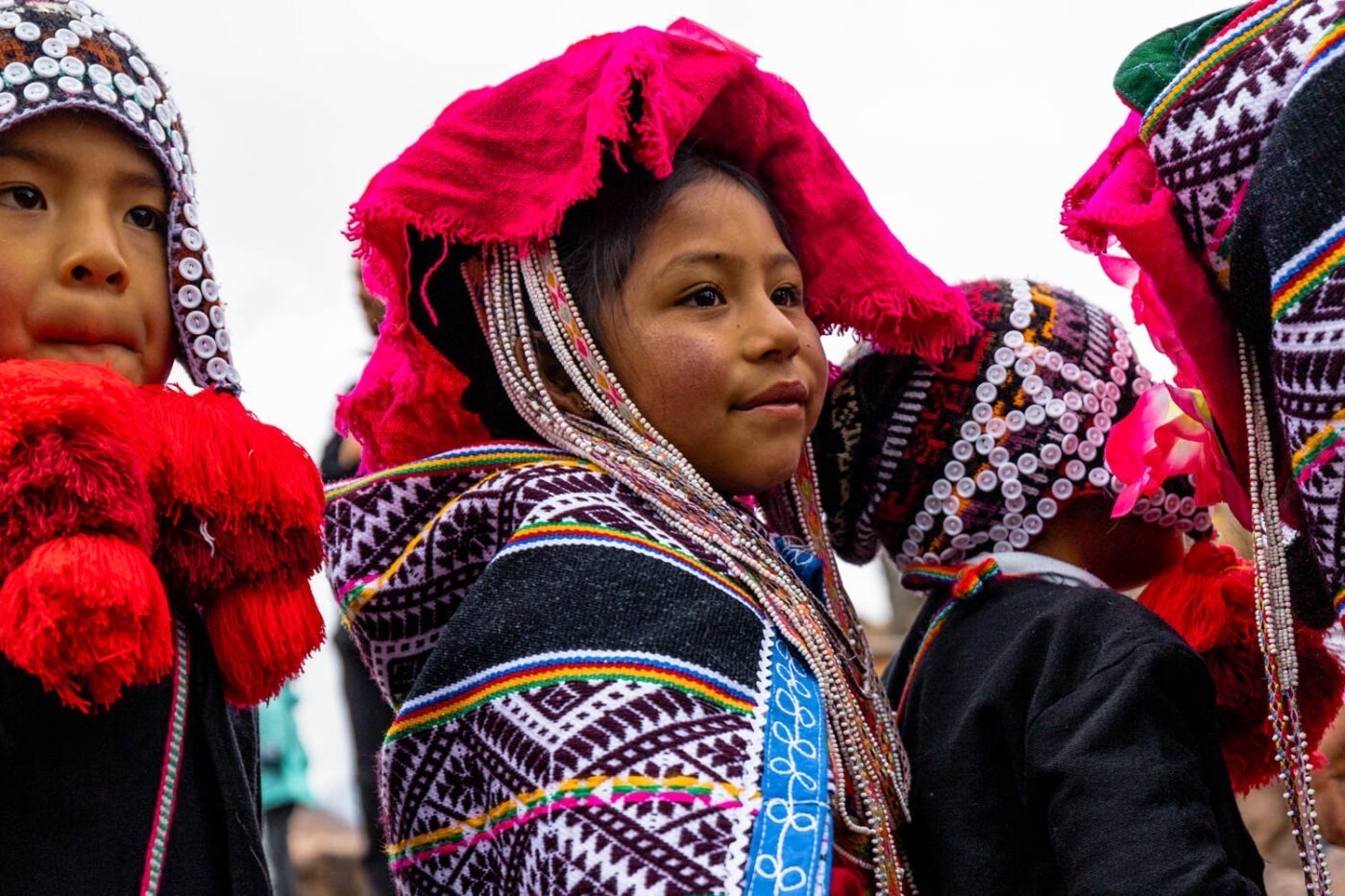
5 – Always ask before taking photos
From the landscapes to the traditional dress, Peru is a colourful country that is just asking to be photographed.
If you want to enjoy taking photos of local people, though, please always get permission before doing so.
The photo above was taken (with permission!) when Alpaca Expeditions took some of their employees’ children on a trip to the Sacred Valley.
I was lucky enough to tag along and see the amazing work they do firsthand, and I was also able to take some portraits of the children involved for them.
Throughout the day, lots of tourists (unsurprisingly) asked to photograph the children in their traditional dress. Most of them asked, but not all of them did. Others tried to take photos in sneaky ways.
If you want to take someone’s photo, it’s only right to ask permission – even if you see others taking their photo already.
This is true everywhere, of course, but is worth reiterating in such a photogenic destination as Peru.
6 – Spot an abundance of wildlife
If there’s one animal you’re sure to spot in Peru, it’s the alpaca. Home to around 87% of all alpacas in the world, these comical camelids are everywhere.
But that’s not the only wildlife you can spot in Peru. Only just behind Colombia, Peru has the second-highest number of bird species in the world at more than 1800.
Add more than 500 species of mammals, 300 species of reptiles and more than 20,000 species of flora, and it’s easy to see how Peru’s varied ecosystems provide a home to more than 70% of the world’s biodiversity.
Whether you choose a hiking trip to the Andes or spend time getting close to nature in the Amazon, wildlife is sure to play a role in your trip.

7 – Enjoy the natural side of things
The natural world is so intertwined with daily life in Peru that it’s easy to miss a lot of it.
Even a stroll around Cusco, the seventh most populous city in Peru, turns up many opportunities to connect with nature – and also to learn about Peru’s unique connection with it.
This became most apparent to me when I realised the green bushes that I’d been walking past in San Francisco Square were in fact quinoa plants!
It was the first of many times during my trip when I became aware of how nature infiltrates every area of life in Peru.
8 – Learn about Peru’s history
Cusco is home to many museums, several of which are included in the Boleto Turistico tourist ticket.
I only visited one: the Museo Historico Regional (or the regional history museum).
In all honesty, it wasn’t on my Cusco bucket list. I had some time to kill before an evening cooking class, and it was included on the tourist ticket I’d already bought to enter Moray and Maras.
And I’m so glad I did! These museum contains a digestible amount of information about prehistoric times, including the creatures that inhabited the land we now know as Peru back then.
Once you’ve admired the fossilised mastodons, trilobites and gastropods, you can also learn about Peru’s more recent history – namely Spanish rule – upstairs.

9 – Support local artisans
Peru is the kind of destination where you’ll want to arrive with a half-empty suitcase. Even as someone who doesn’t usually buy souvenirs, I had to really choose carefully because I simply couldn’t have fitted everything I wanted in.
If you’re visiting Cusco, you’ll notice stores selling alpaca wool sweaters, hats, gloves and homeware every few metres. Unfortunately, a lot of these products aren’t true alpaca wool – and, even when they are, it’s possible they came from a less-than-ethical source.
That doesn’t mean you shouldn’t save space for some alpaca wool goods. After all, it’s the most sustainable wool and, because the alpacas require yearly shaving, is even considered vegan by some.
However, buying from the right place is important. The best place to buy alpaca wool is in Chincheros, so I highly recommend taking a short trip out of the city to buy from here.
Not only can you be sure that you’re buying a legit product from an ethical source, but you can even see the dying and weaving in action because, in most cases, everything is made right there.
If you prefer to stay in Cusco, the Centro de Textiles Tradicionales supports local communities, but expect to pay a slightly higher price for the convenience.
Other Peruvian souvenirs that may tempt you include arts and edibles.
For the former, there are many galleries around town, as well as regular pop-up markets and events. I spoke to several artists who were willing to paint artwork on request. So, if you find an artist you like, don’t be afraid to ask if they can make something special for you!
For the latter, you’ll find locally grown coffee, chocolate and native products like maca all over. Again, make sure you check the quality and buy from a reputable source. You’ll also want to check you can legally take these products home with you!
(Fun fact: In Peru, Nestlé products have to be labelled as ‘chocolate-flavoured candies’ because they’re not considered real chocolate!)
Whatever you choose to buy, supporting local artisans helps to make sure your money goes to the best cause.
10 – Choose day trips that have a positive impact
While choosing an ethical tour company is one of the best things you can do to support responsible tourism in Peru, the tours that you choose make a difference, too.
When I last visited Peru, everybody was raving about Rainbow Mountain.
However, while it was one of the most popular things to do in Cusco, I decided to skip this ‘must-see’ attraction.
After some research, I had my concerns about over-tourism and what that could be doing to the environment.
Rainbow Mountain has only been an attraction since 2015, when the melted snow revealed it for the first time.
Now, the tiny trail receives around 1,500 visitors per day – and I’m not convinced that it’s sustainable number.
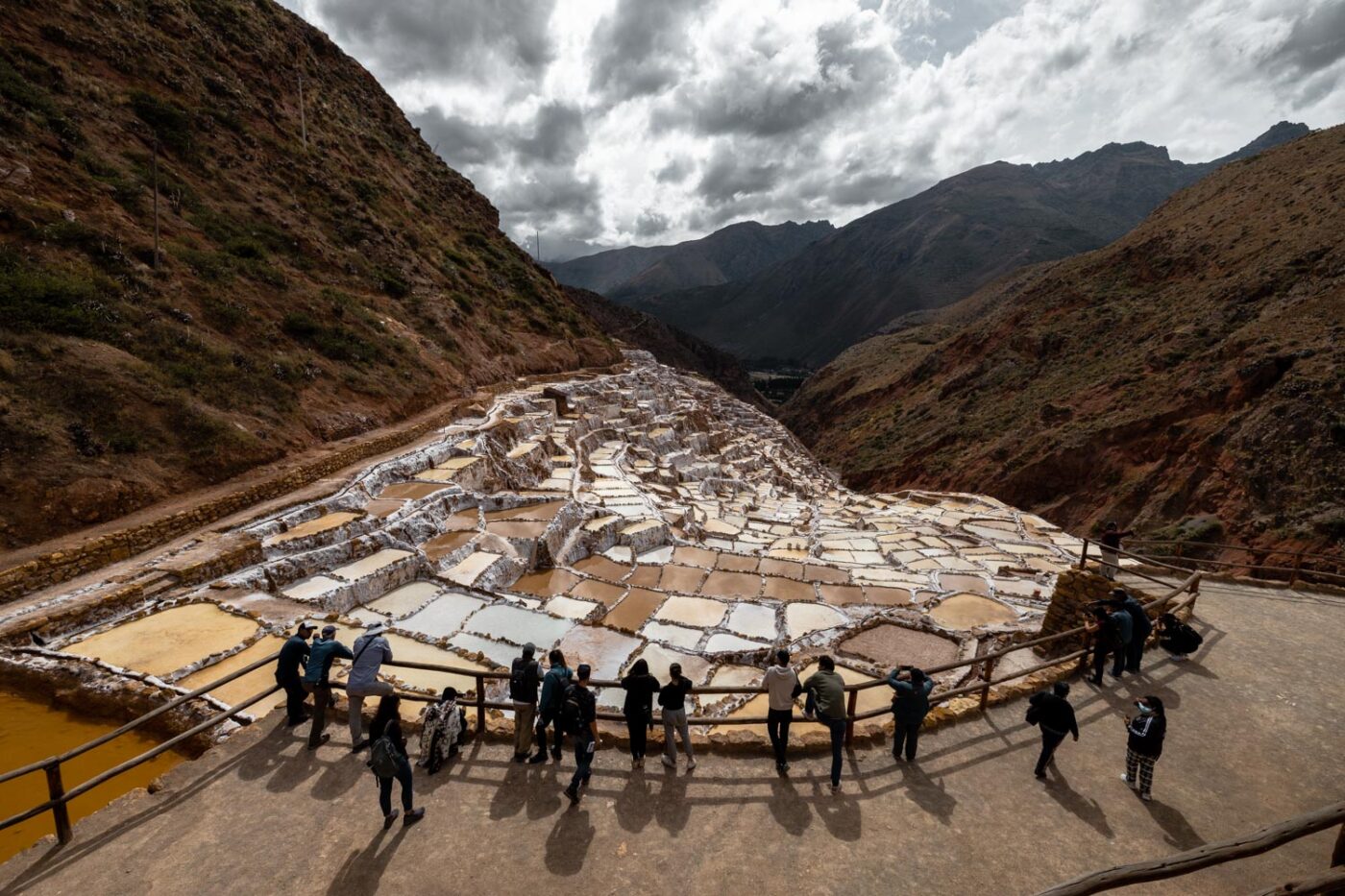
Instead, I chose to visit equally impressive sites that are better geared up for tourism, such as the Maras salt mines.
While I can’t tell what to do, I urge you to research anything you’re planning to do in order to make your own decision.
Things to know before visiting Peru
Enjoying ecotourism in Peru goes beyond soaking up the numerous ways to enjoy the natural world, of course.
Here are a few more tips that will help you travel responsibly in Peru.
Respect the rules
This one should go without saying, but rules are there for a reason.
This is especially important in a country like Peru, where both the natural environment and important archaeological sites can so easily be affected.
If you are told to avoid touching something, stay on a trail or anything else, trust that it is for a good reason.
Learn a little Quechua
While almost everybody speaks Spanish, Quechua is the most widely spoken indigenous language in Peru and one of the country’s official languages.
IF you are visiting the southern and central regions of Peru, a little Quechua will go a long way.
Think twice about ayahuasca
Ayahuasca tourism isn’t uncommon in Peru, where the psychoactive drink is legal.
And, while it isn’t inherently a bad a idea, do your research before booking anything.
As a local guide informed me, many of the ayahuasca retreats and centres are owned by tourists who come to Peru to profit off the industry.
This can negatively affect local companies and individuals who are true experts in the area.
Water is a very valuable (and limited) resource
On several occasions, I heard tourists complaining about the somewhat unreliable hot water at their hotels in Cusco.
What they perhaps didn’t know is that many of the homes around the city only have running water for five hours per day – and it’s rarely hot.
While there are projects to resolve this issue, the water issue is an ongoing one for now.
Remaining conscious of this – and avoiding wasting water – can make a big difference to both your experience and the lives of local people.
You cannot drink the tap water
Speaking of water, you cannot drink the water (unless it’s filtered or boiled first) and that means that it’s easy to use a lot of plastic.
If you bring a reusable water bottle so you can cut back on plastic usage when possible.
Tipping isn’t required, but always appreciated
While tipping culture isn’t as strong as it is in countries like the United States, it is considered good practice in Peru.
I usually added 10-15% to my bill in any restaurant or café, and only in one case was it not possible to do this by card.
It’s also common practice to tip guides, porters and anyone else who helps you during tours and day trips.