
When it comes to wildlife in Tasmania, the Australian island offers an unparalleled range of unique animals and habitats that make it a must-visit destination for any nature lover.
From the endangered, yet iconic, Tasmanian devil in the remote Tarkine, the furry ball-shaped wombats in the rugged terrains of Cradle Mountain-St. Clair National Park, to the elusive platypus swimming in the freshwater streams around Mount Field, animals from Tasmania provide a captivating experience for all ages.
This comprehensive guide will take you through the best places to see wildlife in Tasmania, from the bright blue bays of Freycinet National Park to the serene shores of Bruny Island.
Whether you’re interested in birdwatching, marine mammals, or spotting marsupials from afar, witnessing Tasmanian wildlife is a must-do on any Tasmania road trip.
Just to let you know… This post contains affiliate links, including Amazon Associates links. I may receive a small commission from them at no extra cost to you.
Wildlife in Tasmania
Australia as a country is a gold mine for wildlife lovers, from the cute and smiley quokkas of Rottnest Island to the more than 30 species of marine life that inhabits the Great Barrier Reef.
But, of all the places to explore, nothing compares to the incredible wildlife in Tasmania.
Ocean Life
Tasmania’s waters are teeming with a variety of marine species.
Expect to see Australian fur seals lounging on rocky outcrops and bottlenose dolphins gracefully cutting through the waves.
If you’re lucky, you might even spot the awe-inspiring southern right whales or humpback whales during their migration seasons.
For the best opportunity to see these magical creatures, visit Tasmania between May and July.
Land Animals
On land, Australia’s island state has some of the most unusual mammal populations.
Tasmania is home to a unique set of marsupials – including several endemic carnivorous marsupials – and other mammals.
The endangered Tasmanian devil is perhaps the best-known endemic marsupial and a must-see.
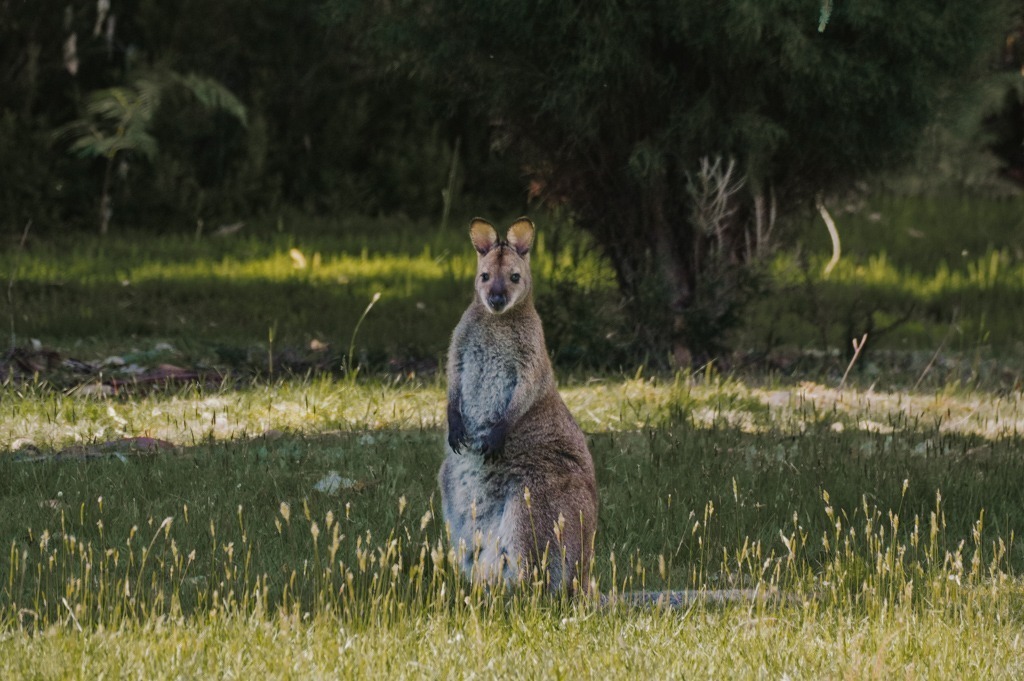
But don’t overlook the Eastern quoll, Bennett’s wallaby, and the common brushtail possum.
For a true Tasmanian experience, keep an eye out for the elusive platypus, one of the few egg-laying mammals in the world.
Birdlife
Bird enthusiasts will be thrilled by Tasmania’s avian diversity, which includes a number of native wildlife such as the yellow wattlebird and the Tasmanian wedge-tailed eagle.
Look skyward for the powerful wedge-tailed eagle or scan the treetops for the colourful green rosella.
The island is also one of the last refuges for the critically endangered orange-bellied parrot, a sight that’s increasingly rare but unforgettable.
Where to see Tasmania’s wildlife
Given that it’s the 26th largest island in the world, it’ll come as no surprise that there’s a LOT to explore on Tasmania.
And, even if you have a full two weeks or more to discover the Tasmania wildlife, it won’t be enough to see it all.
Here are the best places to see wildlife in Tasmania, so you can make the most of your time on this mountainous and biodiverse island.
Cradle Mountain-Lake St. Clair National Park
Situated in the Central Highlands of Tasmania, Cradle Mountain National Park is renowned for its diverse range of land animals, making it a top destination for spotting Tasmanian wildlife.
The park’s alpine heaths and dense forests serve as a natural habitat for the wild Tasmanian devil, often heard growling and screeching during the night.
The common wombat is another highlight, frequently seen grazing on grasslands, especially around Ronny Creek at dawn and dusk.
The optimal time for Tasmania wildlife viewing here is the summer, from December to February, when the wild animals are most active and the weather is conducive for exploration.
If you are looking to stay near the park, choose one of the cosy Cradle Mountain accommodations right at the entrance to the park for each access.
Do note, there are no accommodations within the Cradle Mountain-St. Clair National Park.
Insider travel tip
If you haven’t already booked your flights, I recommend using WayAway to find the best options. Not only do they aggregate the largest number of supplies and the best prices, but you can also get 10% cashback with a WayAway Plus membership!
WayAway Plus is one of my favourite travel hacks because you can save money on almost anything. You just use their search engine to find the best deals and get up to 10% of the cost back in cold hard cash (in your Paypal account).
I love it so much that I’ve teamed up with them to give Alajode readers an exclusive discount of 55% (less than $4 per month)! Sign up using this link and enter the code “ALAJODE” to save on your next travel bookings.
With a destination like Japan, you could save hundreds of dollars in just one trip.
Bruny Island
Bruny Island, accessible via a short ferry ride from Kettering, is not only a gourmet haven but is a great spot for discovering both marine and land-based Tasmanian wildlife.
The island’s Adventure Bay is a popular spot for sighting Australian fur seals and bottlenose dolphins, especially during boat tours that navigate the bay’s waters.
The Neck Game Reserve is more than just a scenic lookout.
Here you can find the main habitat for seabirds like the short-tailed shearwater and the little penguin, which you can see waddling ashore at dusk.
Don’t miss the chance to spot the rare white wallaby, often found in the more secluded, grassy areas of the island, especially in Southern Bruny Island.
The prime time for Tasmanian wildlife spotting on Bruny is from November to April, when the weather is warm and the seas are calm, offering the best visibility for marine life.
Tasman Peninsula
The Tasman Peninsula is a dramatic landscape of towering cliffs and deep-sea caves, making it a unique setting for observing Tasmania’s sea-based wildlife.
One of the highlights here is the Tasman Island Cruise, where you can get up close with Australian fur seals lounging on the rocks and pods of dolphins leaping through the waves.
For those interested in birdwatching, the peninsula is a prime location for spotting sea eagles and peregrine falcons soaring above the cliffs.
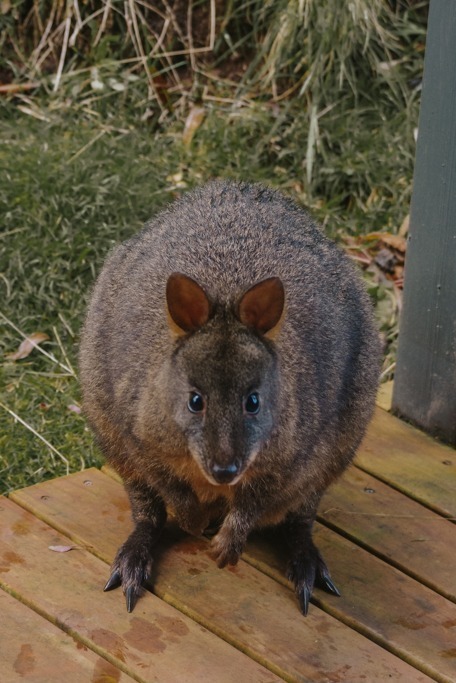
The peninsula’s forests are also home to native animals from Tasmania like the Eastern quoll and pademelons, small marsupials best seen on the remote hiking trails of the area.

Freycinet National Park & Bicheno
Freycinet National Park is a gem on Tasmania’s east coast, known for its pink granite peaks and azure bays.
But beyond its scenic beauty, it’s a hotspot for wildlife.
The park’s Wineglass Bay is a popular location for spotting dolphins and even the occasional migrating whale.
On land, you’re likely to encounter Bennett’s wallabies and the Tasmanian pademelon, particularly near popular walking trails like the Hazards Beach Circuit.
Bicheno, a nearby coastal town, is one of the best places to see wildlife in Tasmania, and in particular to experience its Fairy Penguin population.
Here, you can watch the little aquatic flightless birds return ashore after a day of fishing.
For a different kind of spectacle, the Bicheno Blowhole area is a gathering spot for seabirds like silver gulls and sooty oystercatchers.
Maria Island National Park
Maria Island National Park is a Tasmanian wildlife sanctuary like no other, accessible only by ferry, which adds an extra layer of adventure to your trip.
The island is a haven for some of Tasmania’s most iconic land animals and an easy day trip.
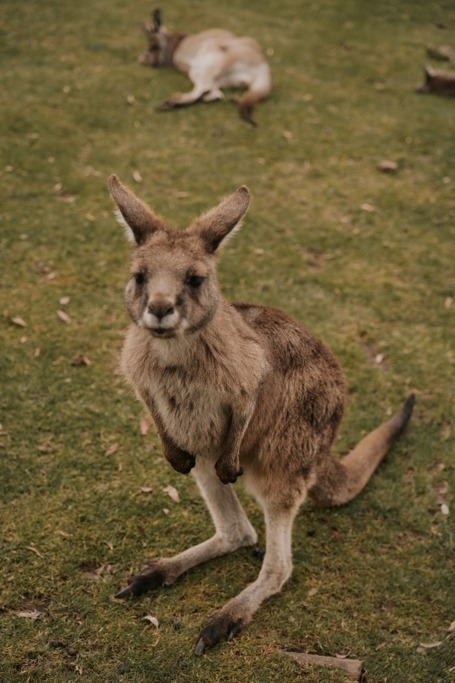
You’ll likely encounter Forester kangaroos and Bennett’s wallabies grazing in the open fields, often unfazed by human presence.
But the real star here is the Tasmanian devil. The island serves as a vital conservation area for these endangered marsupials.
Maria Island is also a goldmine for bird watchers.
The island’s diverse habitats, from its eucalyptus forests to coastal cliffs, attract a wide range of bird species.
Keep an eye out for the endangered forty-spotted pardalote, a bird so rare it’s found only in certain parts of Tasmania.
The Painted Cliffs, a natural sandstone formation, not only offers a stunning backdrop but also serves as a nesting area for seabirds and is also a great place in Tasmania to see wildlife.
Narawntapu National Park
Often referred to as the “Serengeti of Tasmania,” Narawntapu National Park’s grasslands and wetlands create a fertile environment that attracts a variety of wildlife in Tasmania.
Forester kangaroos, Bennett’s wallabies, and Tasmanian pademelons are commonly seen grazing in the open fields, especially during the late afternoon when these animals are most active.
Golden hour is also one of the best times to capture Tasmania wildlife by camera.
Birdwatchers will also find Narawntapu to be a rewarding destination.
The park’s lagoons and estuaries are frequented by a variety of waterbirds, including black swans and herons.
For something a bit more elusive, the park is one of the few places in Tasmania where you can spot the Eastern ground parrot, a bird that prefers the cover of the park’s heathlands.
The Tarkine
The Tarkine is one of Australia’s last wilderness frontiers, offering an untouched haven for a plethora of Tasmanian wildlife.
This expansive temperate rainforests provide one of the best places to see the elusive Tasmanian devil in its natural habitat.
The area is also rich in Aboriginal heritage, adding a cultural layer to your wildlife expedition.
Bird enthusiasts will find the Tarkine a paradise for spotting rare and endangered species.
The dense foliage and remote location make it an ideal habitat for birds like the wedge-tailed eagle and the yellow-tailed black cockatoo.
But it’s not just about the fauna as the flora here is equally captivating.
The ancient myrtle and sassafras trees create a canopy that’s a spectacle in itself, offering a different kind of wildlife experience focused on the area’s unique vegetation.
The one thing you should never travel without
Even though you hope you’ll never need to use it, travelling with insurance will make sure you’re covered if anything goes wrong.
I use Heymondo because it’s the most comprehensive cover I’ve found – they even cover the more adventurous activities that other insurers won’t.
As a partner of Alajode, they’re offering an exclusive 5% discount for my readers. Click here to find out more, get an instant quote and save even more!
Western Wilderness
The Western Wilderness is a rugged and remote area of Tasmania, characterized by its dense forests, rushing rivers, and mountainous terrain.
This isolation makes it a sanctuary for some of Tasmania’s most difficult-to-find wildlife.
If you’re keen on spotting the endangered Tasmanian devil, along with the aforementioned Tarkine, this area offers one of the best chances, especially around dusk when these nocturnal creatures become active.
The area’s isolation and diverse ecosystems attract a variety of bird species, including the rare orange-bellied parrot.
This critically endangered endemic bird species is a sight to behold and a testament to the area’s untouched nature.
The Western Wilderness is also home to a variety of aquatic life.
The region’s rivers are teeming with platypus, and if you’re patient, you might catch a glimpse of this unique mammal swimming or feeding along the riverbanks.
Mount Field National Park
Mount Field National Park, located just over an hour’s drive from Hobart, is a diverse environment that offers multiple opportunities for wildlife observation.
For those interested in aquatic life, the park’s streams are a known habitat for platypuses, just like the wild western frontier of the island state.
Bird enthusiasts will appreciate the presence of endemic species, such as the Tasmanian scrubwren and thornbill, which are commonly seen in the park’s diverse range of ecosystems, from dense forests to open meadows.
As the sun sets, another spectacle emerges near Russell and Horseshoe Falls: glow worms.
These bioluminescent insects create a natural light show in the area’s damp caves, a great experience for the kids.
Additionally, the park is notable for its unique flora, including the pandani, the world’s tallest heath plant, which can be seen along the Pandani Grove Walk.

Bonorong Wildlife Sanctuary
For something a little different from the natural places to see wildlife in Tasmania, just a 30-minute drive north of Hobart is the Bonorong Wildlife Sanctuary.
This ethical rescue and rehabilitation centre for some of Tasmania’s most endangered species offers a unique, hands-on experience.
Have the opportunity to get up close with animals like the Tasmanian devil – or “tassie devils”, as the locals would say – kangaroos that come and go from the property, and furry wombats.
Bonorong is home to a variety of avian species too, including the endangered yellow-tailed black cockatoo.
The sanctuary operates a variety of ethical tours.
If you’d like to partake in the rare opportunity to see Tasmanian wildlife during their most active hours, try a nocturnal tour.
Or, participate in the care and feeding of these unique animals through the “Keeper for the Day” experience, gaining an in-depth understanding of Tasmanian wildlife.
Author Bio
Haley is the founder of the global travel blog, Haley Blackall Travel. She has travelled to 40+ countries across 5 continents over the last 15 years. She loves to share in-depth travel guides and recommendations to help travellers get the most out of their vacation time, including her favourite boutique hotels, things to do and travel itineraries.