
Almost everybody can name a life-changing trip they once took.
Whether it was the catalyst for a travel-filled future or the discovery of an entirely new passion, sometimes you leave somewhere a different person to who you arrived as.
I’m not too sure what I expected from my recent trip to Patagonia, but I have a feeling my time “at the end of the Earth” taught me more than I realised.
It was a strange trip, to say the least.
For the entirety of my time in Patagonia, I had that weird sensation of not quite being present, like I was watching myself travel rather than actually travelling.
I’m not sure what caused it, but it meant the whole thing feels like a long, beautiful dream.

Just to let you know… This post contains affiliate links, including Amazon Associates links. I may receive a small commission from them at no extra cost to you.
A sickly start to a new continent
It was my first time in South America and my first trip to a new continent in more than eight years.
Naturally, I was pretty excited for this one.
But the excitement I felt at being in a brand new continent – and a part of the world that seems to be having a moment right now – was soon interrupted.
At first, it was the exhaustion of a 14-hour flight turned 20-hour flight after foggy weather forced our plane to divert and refuel before landing in our intended destination.
Even though I still made my connection, the anticipation of not knowing if I would made for a pretty anxious start to the trip.
Then, as soon as 3 days of sleep and catching up on work had me feeling refreshed again, illness struck.
I felt it coming on as we arrived at Santiago airport, ready to catch the flight down to Punta Arenas, and by the time we arrived I felt weak and useless.
Queue two days stuck in bed, with only enough energy to check emails for 10 minutes at a time.
By the time our Patagonia tour began, the flu-like symptoms had begun to ease. By day 3, I was feeling like myself.
Nobody wants to be stuck in bed all day, but I was grateful that I’d fallen ill at the best time possible.
And then, on day 6 of the tour, the 19km round-trip Laguna Torre hike caused an arthritis flare-up in my left foot. It left me in excruciating pain, unable to walk for 2 days, and hobbling until the end of the trip.
Update: It turned out to be much worse.
This incredible Patagonia hike was so beautiful that it was (almost) worth it. But it also meant I had to sacrifice any kind of adventure for the rest of the trip.
And so I spent a lot of time in hotel rooms.
I spent hours searching for ways to ease the pain and distract myself.
I also spent more time than I’d like to admit feeling sorry for myself (that pain, though!).

Time to reflect
Being stuck in (some admittedly very nice) hotel rooms meant I had a lot of time to myself. I had a lot of time to reflect.
I came to Patagonia to escape my day-to-day work and put all of my energy into travel for a couple of weeks. My main goal, I suppose, was to enjoy something that might resemble a holiday.
What I ended up with, however, was a lot of down time and a lot of time to think.
In those moments, I came close to regret. Should I have stayed in Europe? Gone straight to Peru? Checked into an all inclusive and chilled out for a week?
It’s easy to feel low when you’re stuck in a room. But this wasn’t a sad feeling that I had – it was more of a very zen state of acceptance and reflection. And by that I mean I wasn’t entirely gutted to be stuck in that room.
All I can think is that I felt that way because it was exactly what I needed: some time alone to think.
Just as I was hitting the tipping point and starting to feel sorry for myself, the regret quickly disappeared and was replaced by a realisation.
Somehow, this misadventure had reignited my desire to travel.

Go hard or go home
Although it might not sound like a huge revelation to anyone else, it was a very unexpected change of heart for me.
For the last few months, I’ve been sure that my near future would involve finding a base and taking things slower. I’ve been craving it.
It’s not that I want to travel less, just that I quite like the idea of having a base to go back to. Somewhere to call my own and do as I please with. Somewhere to display the souvenirs I currently can’t buy.
For the first time in my life, I’ve wanted to own a house and feel a little grounded.
While I was in Patagonia, however, I went from planning to semi-settle to planning a trip that would cover an entire continent.
Now I’d seen Chile and Argentina, I had a sudden desire to visit much more of Latin America: Guatemala, Colombia, Bolivia, Ecuador, Costa Rica, Nicaragua.
And, just like that, I remembered how much I love travel.
I don’t know where it came from, but in that moment I knew my plans needed to put on hold. That I need to keep travelling just a little longer. To really go hard before I find “home”.
And so, I think my next year could be my most travel-packed yet.
There’s so much I want to see and I know I’ll always have those “what ifs” if I (semi-)settle too soon.
For a start, I still haven’t made it to Australia and my Africa bucket list is always on my mind.
And I want to travel deeper when I do go. They’re the kind of places that I don’t want to rush on a one or two week trip, so it only makes sense to make the time for them while I can.
Unexpected inspiration
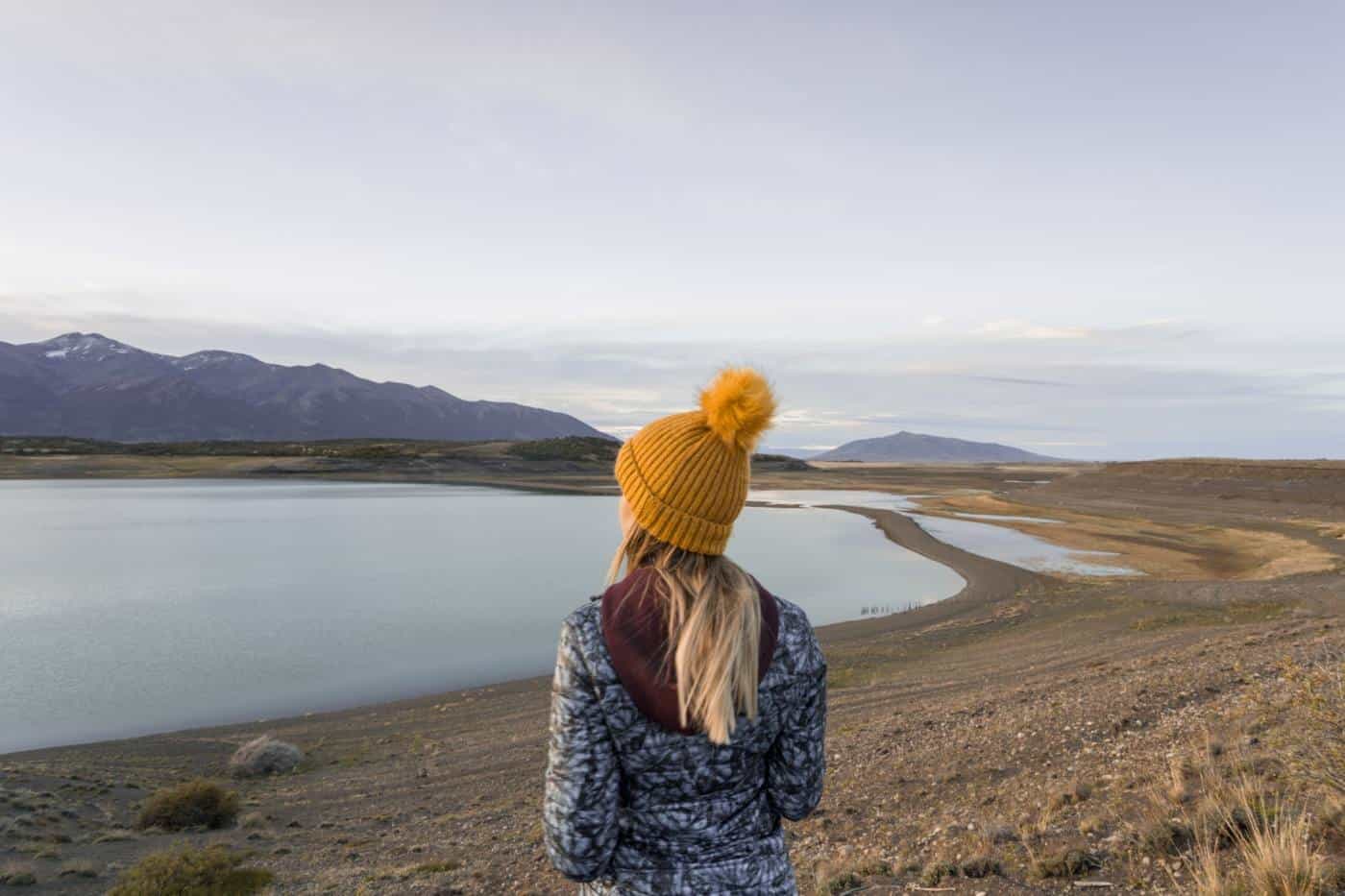
And so, just when I thought Patagonia had been a bit of a bust and had failed to inspire me, I realised it had had more of an effect on me than I could have imagined.
It’s funny how things turn out sometimes, isn’t it?
There’s nothing quite like the excitement and inspiration that comes from being somewhere new, and in Patagonia I remembered that.
Even though I couldn’t do everything I wanted, I felt that rush of excitement you get when you think about planning a trip. I felt inspired to see the world. And I felt the awe of realising how much of it I haven’t yet discovered.
I guess that inspiration is why many of us travel. It’s certainly one of the main contributors to my wanderlust – and I’m glad I rediscovered it in Patagonia.
Enjoyed this post? Why not pin it or share it so someone else can enjoy it too:
